
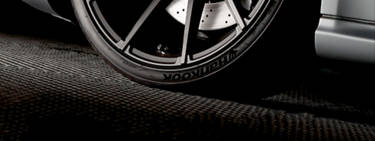
Trendy, sporty, and promising sporty handling, low profile tires have a lot to offer – but are they right for you?
While they can improve cornering and give your vehicle that objectively awesome look, they do come with some tradeoffs such as a firmer ride and increased road condition sensitivity. We explore the pros and cons of low profile tires to help you decide if they’re right for your ride and driving style.
WHAT ARE LOW PROFILE TIRES?
A low profile tire has a shorter sidewall height (50mm or less) than standard tires. This is measured using the tire’s aspect ratio, which is the sidewall’s height as a percentage of the tire’s width. In general:
- Lower aspect ratio (50 or below) = low profile tire
- Higher aspect ratio (60+) = standard tire
Low profile really just means low aspect ratio.
Because they have less sidewall, low profile tires flex less than standard tires, yielding sharper handling and increased road connection. You can find these tires on street performance models but are increasingly found on sedans and crossovers. Vehicle manufacturers are increasingly offering larger rim sizes to accommodate larger brakes.
Low profile tires are not limited to a tire type; you’ll find them on:
There is no “low profile tire” category because tire size dictates a tire’s profile.
PROS AND CONS OF LOW PROFILE TIRES
Choosing between regular and “low pro” tires is really about recognizing what you need from your tires and vehicle.
Pros
There are a number of pros to low profile tires. They can increase your vehicle performance in nearly every way. They have:
- Sporty appearance with larger wheels and lower sidewalls
- Improved handling and cornering
- Enhanced steering response
- Better road connection (contact patch)
- Increased lateral G’s
- Less flex under acceleration
You may need to switch to low profile tires if you upsize your wheels, or upgrade your ride’s suspension or brakes.
Cons
There are some downsides to equipping your vehicle with low profile tires. Although all vehicles are different, you can experience the following with low profile tires:
- Rougher ride, vibration, or harshness
- Decreased winter performance
- Increased noise at highway speeds
- Increased chance of blowouts and tire failures
Low profile tires don’t have as much space to absorb impacts or bumps, ruts, hazards, or potholes. There is less protection for your wheel and rims, as well. Unfortunately, in many cases you cannot claim this type of damage on your car insurance, which can lead to costly out-of-pocket expenses.
LOW PROFILE TIRES VS REGULAR TIRES
Choosing between regular and “low pro” tires is really about recognizing what you need from your tires and vehicle. We quickly outline the differences in features between standard and low profile tires.
| Feature | Low Profile Tires | Standard Tires |
|---|---|---|
| Ride comfort | Firm | Smooth, more padded |
| Handling | Excellent | Moderate/dependent upon tire type |
| Road noise | Higher | Lower |
| Durability | Lower | Higher |
| Appearance | Sporty | Traditional |
In general:
- Choose low profile tires if you want performance and style
- Choose standard tires if you prefer comfort and durability
Most ordinary drivers will never need the enhanced handling of a low profile tire. Enthusiasts should take extra care when choosing their next set of low pro tires as a poorly designed one can lead to disappointing performance or even tire failure.
What are the tradeoffs of low profile tires?
Low profile tires are all about balance. They can improve performance but at a cost:
- Comfort vs Performance: better handling comes with a stiffer ride
- Durability vs Responsiveness: less sidewall means less protection
- Noise vs road feel: increased road feedback results in more cabin noise
Who should choose low profile tires?
Low profile tires are a good choice if you:
- Drive a sports car or performance-focused vehicle
- Prioritize handling and steering precision
- Want a sporty, aggressive look
- Mostly drive on smooth, well maintained roads
Who should avoid low profile tires?
You may want to consider regular tires if you:
- Prefer a comfortable, cushioned ride
- Drive on rough roads or areas with potholes
- Want long-lasting tread life
- Frequently encounter uneven terrain, obstacles, or debris
BEST LOW PROFILE TIRES FOR PERFORMANCE DRIVING
Since low profile tires are primarily a matter of size, it can be hard to shop for them as there’s no “low pro” category. Instead, search for good performance tire models that come in low aspect ratios.
Popular models include but certainly not limited to:
Shop low profile tires near you
If you’re ready to ramp up your ride, we’ll help you find the best option for you. When you shop with us, you get:
- Our low price promise
- FREE tire services such as inspections, air checks, and flat tire repairs
- Price matching
- Largest inventory of tires and wheels anywhere
- Over 60 years of tire expertise
- White-glove experience
Start with Treadwell, our tire buying tool that recommends the best tires for you. Simply:
- Add your vehicle info
- Tell us what’s important to you
- Where you’re driving
Treadwell will show you tires that fit your vehicle and your needs, backed by robust testing and third party data.
START WITH TREADWELLWe don’t recommend “cheaping” out on your low profile tires because these tires are more likely to fail, receive damage, or allow damage to your wheels.
FAQ
Below are some of the most common questions we get about low profile tires.
Yes, low profile tires tend to ride firmer because their shorter sidewalls absorb less road impacts compared to a standard tire.
They can be more likely to get damaged from impacts, curbs, potholes, and more due to their thinner sidewalls.
In many cases, yes. Performance-oriented tires often prioritize traction which can lead to faster treadwear compared to standard tires.
They are if you value handling, performance, and appearance. Standard tires are a better choice if you prefer comfort and durability.
Ready to roll?
If you have any questions or are unsure what tires work best for you, drop in or give us a ring. We’ll get you taken care of. Buy and book online and save time in-store!
For more information on this and other tire and wheel services, check out our YouTube Channel or reach out to us on X, Facebook and Instagram.