
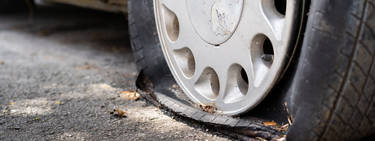
Watch to learn more
Spot any of these on your tires?
COMMON TYPES OF TIRE DAMAGE
- Tire bubbles (sidewall bulges): A raised lump on the side
- Low tread (worn tires): Smooth or bald surface
- Dry rot (cracking): Small cracks in the rubber
- Exposed cords (plies): Visible threads or wires
- Heat rings: Dark circular band from overheating
- Alignment wear: Uneven treadwear patterns
- Punctures and cuts: Nails, holes or slashes in the tire
When it comes to tire damage, most drivers aren’t sure what they’re looking at.
Is that crack dangerous?
Is that bulge serious?
Can I still drive on it?
Fact: many types of tire damage are easy to spot once you know what to look for–and catching them early can prevent a blowout or unsafe driving conditions.
SCHEDULE AN APPOINTMENT TODAY!AT A GLANCE: IS YOUR TIRE SAFE?
| Unsafe - Replace Immediately | Needs Attention Soon | May Be Repairable |
|---|---|---|
|
|
|
WHAT A TIRE BUBBLE LOOKS LIKE
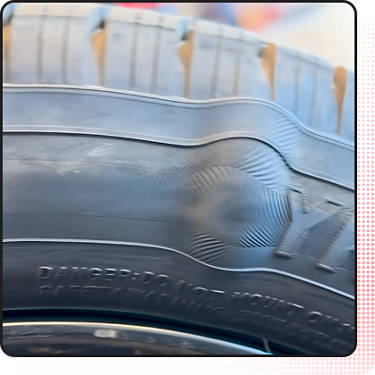
A tire bubble, also called a sidewall bulge or impact break, is a bulge in the sidewall caused by internal damage, usually from impact.
What you'll see:
- A noticeable bump on the sidewall
- Smooth but uneven surface
- More visible when looking at the tire from an angle
What it means: This usually happens after hitting a pothole or curb. The internal structure of the tire is damaged, even if the outside appears intact.
What to do: A tire with a bubble is not safe to drive on. It can suddenly fail, so immediate replacement is recommended.
WHAT LOW TIRE TREAD LOOKS LIKE
Low tire tread means the grooves are worn down, reducing traction and safety.
Tread is what helps your tires grip the road. When it wears down, your tire can look smooth or bald.
What you'll see:
- Shallow or barely visible grooves
- Smooth, worn surface
- Treadwear indicators, or small bars, becoming flush with the tread
Almost all passenger vehicle tires now include indicators.
You can perform the penny test to check if your tread is too low.
What it means: Low tread means reduced traction, especially in rain, and increased stopping distance.
What to do: If your tread is worn, it is time to replace your tires.
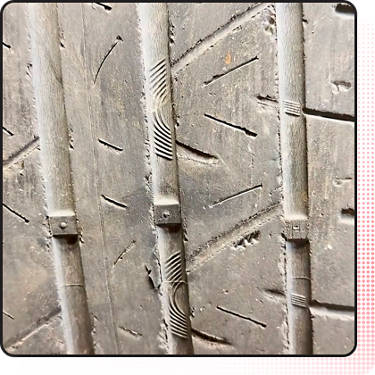
WHAT DRY ROT ON TIRES LOOKS LIKE
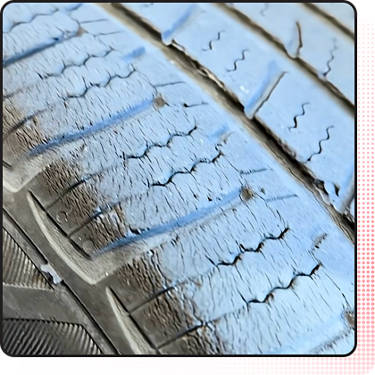
Dry rot is cracking in the rubber caused by age, heat or sun exposure.
Dry rot is also called weathering. It occurs when a material dries up and loses structural integrity.
What you'll see:
- Thin cracks spreading across the surface
- Rubber that looks faded, brittle or chalky
- Cracks that worsen over time
What it means: Your tire's structural integrity is compromised. Discount Tire does not recommend driving on a tire with dry rot.
What to do: Cracked rubber weakens the tire. If you see visible cracking, have your tires inspected or replaced.
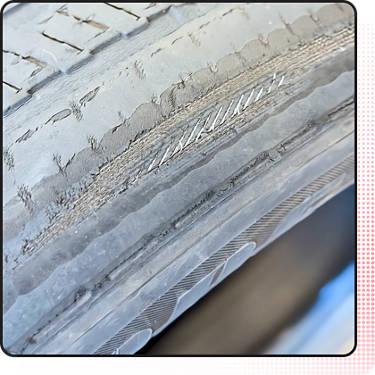
WHAT EXPOSED TIRE CORDS LOOK LIKE
Exposed cords are the internal layers of the tire showing or poking through worn rubber.
What you'll see:
- Threads, fabric or metal wires showing through
- Frayed or torn rubber
- Deep wear exposing inner layers
What it means: Your tire's structural layers are exposed. At this point, your tire is at a high risk of failure or blowout.
What to do: Do not drive on a tire with exposed cords. It requires immediate replacement.
WHAT HEAT RINGS LOOK LIKE
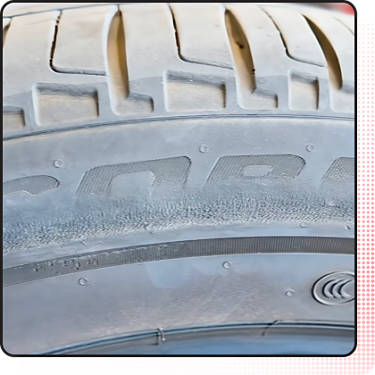
A heat ring is a visible band on the tire caused by excessive heat and structural stress.
What you'll see:
- A distinct ring or band around the tire
- Discoloration compared to the rest of the rubber
- Often paired with other signs of stress or wear
What it means: Heat rings indicate the tire has experienced excessive heat, often from underinflation or overloading.
What to do: Discount Tire will not service or inflate tires with heat rings. These tires should be replaced.
WHAT ALIGNMENT WEAR LOOKS LIKE
Alignment wear is uneven treadwear caused by improper wheel alignment.
Alignment issues cause uneven wear patterns that look different from normal treadwear.
What you'll see:
- One side of the tread worn more than the other
- Feathering, where edges feel smooth one way but sharp in the other
- Patchy or angled wear patterns
What it means: Your wheels are not aligned properly, causing uneven contact with the road.
What to do: If your wheels are misaligned, you will need a wheel alignment service to prevent future issues. You may also need to replace your tires if the wear is severe.
Some Discount Tire stores now offer alignment services.
DISCOUNT TIRE ALIGNMENT SERVICE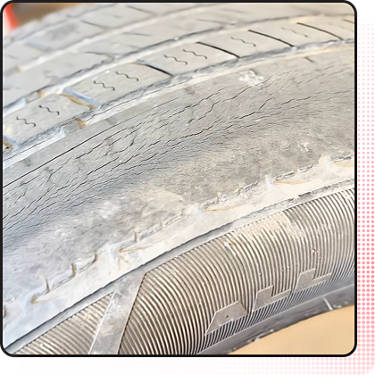
WHAT PUNCTURES AND CUTS LOOK LIKE (MOST COMMON DAMAGE)
A tire puncture is a hole caused by a sharp object, such as a nail or a screw. Cuts and tears can result from severe impacts, sharp road debris, underinflation or overloading.
This is the type of damage most drivers will experience day to day.
What you'll see:
- A nail, screw or sharp object stuck in the tread
- Small holes in the tire
- Cuts or slashes in the rubber, which may be difficult to see
- Slow air loss or repeated need to inflate
What it means: Your tire has been pierced or damaged by road debris, or deliberately cut.
What to do:
- Tread punctures may be repairable if they are small and in the right location
- Sidewall punctures or large cuts are not repairable and require replacement
When in doubt, bring it in for a free inspection. We'll let you know your options and get you taken care of.
DISCOUNT TIRE REPAIRWHAT UNSAFE TIRES LOOK LIKE IN REAL LIFE
In reality, tires often have more than one issue at the same time.
For example, you might see:
- Low tread and cracks
- A puncture and uneven treadwear
- Heat damage combined with sidewall issues
If you ever need to ask yourself, "Would I feel safe driving on this tire at highway speed?" and the answer is no, or even maybe, it is time for a professional inspection.
SCHEDULE FREE TIRE INSPECTIONWHEN TO GET YOUR TIRES CHECKED
You should have your tires inspected if you notice:
- Any visible damage, including bulges, cracks and cuts
- Low tread or uneven wear
- Vibration, pulling or changes in handling
- Frequent loss of air pressure
Discount Tire offers free tire inspections with no appointment needed.
ABOUT DISCOUNT TIRE INSPECTIONSTHE BOTTOM LINE
Tire damage is not always obvious, but once you know what to look for, it becomes much easier to spot.
Catching issues early on can help:
- Prevent blowouts
- Improve safety
- Save you money in the long run
If something does not look right, do not guess. Come to your nearest Discount Tire and let our experts take a look.
FAQ
Below are some of the most common questions we receive about tire damage.
A tire bubble looks like a raised bulge or lump on the sidewall. It may resemble an air pocket pushing outward and is usually caused by hitting a curb or pothole. Tires with bubbles should be replaced immediately.
Yes. Dry rot causes cracks in the rubber, which weakens the tire’s structure and can lead to failure. Even small cracks can worsen over time, so damaged tires should be inspected. They may need to be replaced.
Your tread is too low if the grooves look shallow or the tire appears smooth. Use the penny test to check yourself–if you can see the top of Lincoln’s head, your tread is below a safe level. You can also get a free tire inspection from Discount Tire by tire experts.
Exposed cords look like threads, fabric, or metal wires showing through the tire’s tread. This is a severe safety issue and means the tire is at risk of a blowout and must be replaced immediately.
It depends on the location and size of the puncture. Small punctures in the tread area can often be repaired, but punctures in the sidewall or large cuts require a full tire replacement.
A heat ring is a visible circular band on the tire caused by excessive heat buildup, often from underinflation or overloading. Tires with heat rings are unsafe and should not be used.
Alignment wear appears as uneven treadwear, such as one side wearing faster than the other or feathered edges. It usually means your vehicle needs an alignment service.
You should replace your tires if you see:
Bulges or bubbles
Cracks or dry rot
Exposed cords
Very low tread
Irreparable punctures
Unsure? Get a professional inspection right away. Discount Tire offers FREE inspections!
Ready to roll?
If you have any questions or are unsure what tires work best for you, drop in or give us a ring. We'll get you taken care of. Buy and book online and save time in-store.
Stay up to date with Discount Tire content: add us as a Preferred Source in Google Search.
For more information on this and other tire and wheel services, check out ourYouTube Channel or reach out to us on X, Instagram, Facebook, TikTok and LinkedIn.