
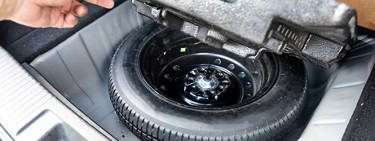
Most spare tires, including both compact “donut” and full-size options, last between six and 10 years, even if they’ve never been used. Factors like heat, moisture, air pressure loss, and aging can all cause spare tire deterioration even while it’s stored in your trunk.
A spare tire can age out before it wears out!
Drivers should consider replacing their spare tire after about nine years, especially if there’s signs of dry rot or cracking.
DO SPARE TIRES EXPIRE?
Yes, spare tires expire over time – even if they’ve never touched the road!
Experts at Discount Tire recommend replacing spare tires after approximately 6-10 years, regardless of tread wear or usage. In extreme weather regions, you may need to replace it sooner.
Like regular tires, rubber compounds in the tread naturally break down as they age. Oxygen, heat, moisture, and temperature changes gradually weaken the tire structure, which reduces traction, flexibility, and overall safety.
You might call your spare tire “new” since you’ve never used it but it is still aging.
Pay attention to the health of your spare tire, especially in:
- Hot climates
- Vehicles consistently parked outdoors
- Vehicles stored long-term
- Externally mounted spare tires
Over time, aging rubber can develop:
- Dry rot
- Sidewall cracking
- Brittleness
- Air pressure loss
- Structural weakness
Experts at Discount Tire recommend replacing spare tires after approximately 6-10 years, regardless of tread wear or usage.
DOES STORING A SPARE TIRE IN YOUR TRUNK AFFECT ITS LIFESPAN?
Yes, storage conditions play a major role in how long your spare tire lasts.
Although it is protected from everyday roadwear, environmental factors inside your vehicle can still accelerate tire aging. These include:
- Oxidation (oxygen exposure)
- Extreme heat or cold
Trunk temperatures can be significantly hotter than the outside air, especially for vehicles parked in direct sunlight. - Humidity/moisture
Lack of use will also make the tire stiff, causing cracks.
Can Heat In Your Trunk Damage A Spare Tire?
Extreme heat is one of the biggest causes of premature tire aging.
Trunk temperatures can become significantly hotter than outside air temps, especially if you are parked in direct sunlight. Over time, heat exposure dries out the rubber in your tire and increases the risk of dry rot or cracking.
If you live in a hot climate, you may experience faster spare tire deterioration (even if you haven’t used it).
DOES AN UNUSED SPARE TIRE LOSE AIR OVER TIME?
Yes. Like normal tires, spare tires naturally lose air pressure over time. Compact spare tires also require higher psi than standard tires. This makes tire air checks even more important.
GET FREE AIR CHECKSAn underinflated spare tire may:
- Be unsafe to drive on
- Generate excessive heat
- Fail during emergency use
Keeping your spare tire maintained with the proper air pressure is key to ensure it’s ready when you need it most.
ARE REAR OR TOP MOUNTED SPARE TIRES MORE VULNERABLE?
Externally mounted spare tires which are often seen on SUVs, Jeeps, and trucks typically age faster than spare tires inside the vehicle. These tires, usually mounted on the rear tailgate or a roof rack, are exposed to:
- UV rays
- Rain and snow
- Temperature swings
- Humidity
- Road debris
- Interference (theft or vandalism)
These conditions can accelerate rubber deterioration and increase the likelihood of dry rot or cracking.
If you have an externally mounted spare tire, inspect it frequently and consider using a protective tire cover.
Learn more about proper tire storage here.
HOW LONG DOES A SPARE TIRE LAST?
A spare tire’s lifespan depends on many factors, including type of tire, storage conditions, maintenance, and climate.
Compact or “donut” Spare Tire Lifespan
Most compact or donut spare tires last between 6–9 years under normal storage conditions.
Compact spare tires are designed for short-term emergency driving only, not extended long-term use. Because donut spare tires are smaller (rotate faster) and have higher psi levels than standard tires, they can quickly become unsafe if neglected.
Most compact spare tires:
- Should not exceed 50 mph
- Should not be driven more than 50 miles
- Should receive regular air pressure checks
Check out our guide on how far you can drive on a spare tire for more information.
Full-Size Spare Tire Lifespan
Full-size spare tires are standard tires, so they typically can last between 6–10 years.
Full-size spare tires are subject to the same aging process while in storage as temporary compact spares. Heat, moisture, and time can weaken a tire that’s never been driven on.
Drivers should:
- Inspect your full-size tires regularly
- Check your air pressure monthly
- Rotate the spare tire occasionally (if appropriate)
- Replace older tires showing signs of damage or dry rot
Spare Tire Life Comparison
| Spare Tire Type | Typical Lifespan | Recommended Use |
|---|---|---|
| Compact/Donut Spare | 6–8 years | Emergency-only driving |
| Full-Size Spare | 6–10 years | Temporary or full time replacement |
| Externally Mounted Spare | 5–7 years | Frequent inspection recommended |
HOW TO TELL IF YOUR SPARE TIRE IS TOO OLD?
A spare tire may look fine at first glance but it could still be unsafe due to internal rubber deterioration.
Drivers should inspect spare tires regularly for signs of aging or damage.
Signs your spare tire may need replacement:
- Cracking in the sidewall
- Dry rot or brittle rubber
- Bulges or uneven shape
- Low or lost air pressure
- Worn tread
- Flat spots due to long term storage
- Visible punctures or damage
- Tire is older than 6–10 years
Check out our blog on what tire damage looks like for visuals and more information!
If your spare tire shows any of these warning signs, it may no longer be safe for emergency use. Bring it to Discount Tire for a FREE inspection.
DISCOUNT TIRE FREE SPARE INSPECTIONHow to Read the DOT Date Code

You can determine your spare tire’s age by checking the DOT date code on the tire sidewall.
The last four digits of your DOT code indicate the week and year the tire was manufactured.
For example: 2521 is the 25th week of 2021
If your tire is approaching 9 to 10 years old, it may be time to replace it even if it looks healthy.
We show you more info on how to read your DOT ID on your sidewall here.
HOW OFTEN SHOULD YOU CHECK YOUR SPARE TIRE?
You should check your spare tire at least once a month, which is how often you should inspect your regular tires.
Most drivers forget about their spare tare until they actually need it. Unfortunately, this is when problems are discovered.
To keep your spare tire road-ready:
- Check tire pressure monthly
- Inspect your spare during oil changes
- Look for cracking and dry rot
- Inspect all tires before long road trips
- Replace old spare tires on or before the 9 year mark
Remember: your spare tire is only useful if it’s safe to use.
IS IT SAFE TO DRIVE ON AN OLD SPARE TIRE?
Even if an old spare tire can hold air, it may still be unsafe to drive on.
As tires age, rubber compounds lose their flexibility and structural strength. Older spare tires are more vulnerable to:
- Blowouts
- Heat failure
- Reduced traction
- Sidewall cracking
- Sudden failure
This is especially risky at highway speeds or during hot weather.
If your spare tire is old, damaged, underinflated, or showing signs of dry rot, it should be replaced – before it’s needed in an emergency.
Learn how fast and how far you can drive on a spare tire here!
FAQ
Yes. Spare tires can expire even if they’ve never been used because rubber naturally deteriorates over time due to heat, oxygen, moisture, and aging.
Most unused donut spare tires last 6-8 years if properly stored and maintained.
Yes, high temperatures inside a vehicle trunk can accelerate rubber aging and increase the risk of cracking or dry rot.
Many compact spare tires require significantly higher air pressure than regular tires, around 60 psi. Always follow your vehicle manufacturer’s recommended air pressure listed in your owner’s manual or door jamb placard.
Yes, spare tires stored in a trunk can still develop dry rot over time due to heat, lack of use, and aging.
Tire experts recommend replacing spare tires after about 6-10 years, even if they’ve never been used. Around 9 years is a good general replacement guideline for many drivers.
Be Ready For The Unexpected!
Most drivers overlook their spare tire and find themselves in hot water in an emergency. Let us help you inspect and maintain your spare tire! Drop in or give us a ring. We’ll get you taken care of. Buy and book online to save time in-store!
Stay up to date with Discount Tire content: add us as a Preferred Source in Google Search.
For more information on this and other tire and wheel services, check out ourYouTube Channel or reach out to us on X, Instagram, Facebook, TikTok and LinkedIn.