

When it comes to vehicle safety, few things matter more than your tires. Improper tire fitment can lead to poor handling, faster wear and potentially dangerous driving conditions.
Understanding tire fitment and tire safety helps ensure your vehicle performs as intended while keeping you and your passengers safe on the road.
WHAT IS TIRE FITMENT?
Tire fitment is the process of matching tires and wheels, sometimes called rims, to your vehicle’s exact specifications to ensure proper performance, safety and handling.
Correct tire fitment ensures your tires:
- Fit securely on your wheels
- Have proper clearance for suspension components, wheel wells, offset and related fitment needs
- Maintain proper contact with the road
- Support your vehicle’s weight and speed requirements
As you can see, proper tire sizing and fitment affects many important safety and performance factors.
HOW TO READ TIRE SIZEKey Factors That Affect Tire Fitment
There are several key factors that affect tire fitment:
- Tire size: includes width, aspect ratio and diameter, for example 225/65R17
- Rim or wheel size: must match the tire’s diameter and width requirements
- Bolt pattern: ensures the wheel mounts correctly to the vehicle
- Offset and backspacing: determines how the wheel sits within the wheel well
- Load index and speed rating: define how much weight the tire can hold and its safe speed limit
Using the incorrect fitment can cause tire rubbing, poor handling, suspension damage and increased safety risks.
WHY IS PROPER TIRE FITMENT IMPORTANT?
Proper tire fitment is critical because it directly impacts your vehicle’s safety, handling and performance.
Incorrect fitment can lead to:
- Reduced braking ability
- Uneven or premature tire wear
- Poor fuel efficiency
- Increased risk of tire blowouts
- Damage to suspension and alignment
Even small mismatches in tire size or specifications can affect how your vehicle responds on the road.
WHY TIRE SAFETY MATTERS FOR EVERY DRIVER
Tires are the only part of your vehicle that touches the road. Maintaining them properly reduces the risk of accidents and helps ensure consistent performance.
Key tire safety factors to monitor:
- Tread depth: Provides traction on uneven, wet or icy roads
- Tire air pressure: Impacts braking, handling and fuel efficiency. All Discount Tire stores offer free air checks.
- Wheel alignment: Helps prevent uneven wear and improves control. Select Discount Tire stores now offer wheel alignment services. WHEEL ALIGNMENTS
- Tread health: Regular inspections can catch punctures, cracks or damage early. All Discount Tire stores offer free tire inspections. FREE TIRE INSPECTIONS
FREE AIR CHECKS
Tires with low tread or incorrect tire pressure are more likely to fail, especially in extreme weather conditions.
HOW TO ENSURE PROPER TIRE FITMENT
You can ensure proper tire fitment by matching your tires to your vehicle manufacturer’s specifications and driving conditions.
Follow the steps below to find the right tire fitment:
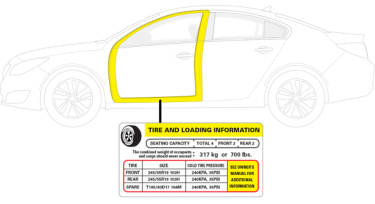
- Check your vehicle placard or owner’s manual: You can find your vehicle placard inside the driver’s door jamb where recommended tire size and air pressure are listed. You can also check your owner’s manual.
- Understand your tire size: Example: 225/65R17
225 = width in millimeters
65 = aspect ratio, or sidewall height
R17 = radial construction and rim diameter in inches - Match load index and speed rating: These must meet or exceed your vehicle’s requirements.
- Choose tires for your driving conditions: Consider climate, terrain and your driving habits, such as whether you have a long commute.
- Need help? Ask a trusted expert or use a tire shopping tool: Tools like Treadwell can help you find the right tire for your vehicle, driving needs and location. We use Treadwell in-store to help customers find the best tires possible.
- Opt for professional installation: Professional mounting and balancing help ensure safety and performance, and it is less work for you.
CHOOSING THE RIGHT TIRES FOR YOUR REGION
Location plays a major role in tire performance and safety. Choose the tires that best suit your driving conditions and weather.
- Cold or snowy regions: Dedicated winter tires improve traction and braking.
- Hot, dry and wet regions: Summer tires offer better heat resistance and grip.
- Four-season regions: All-season or all-weather tires work well in spring, summer and fall, while winter tires offer the best cold-weather performance.
- Coastal regions: Choose tires that resist humidity and corrosion for longer-lasting performance, typically all-season or summer tires.
Region-appropriate tires improve safety, longevity and overall driving comfort.
CONCLUSION
Proper tire fitment and safety go hand in hand. Properly maintained tires help your vehicle perform efficiently while reducing the risk of accidents and costly repairs.
For the best results, use Treadwell, our smart tire buying guide and fitment tool. In a minute or less, it will recommend the best tires for your vehicle, your needs and your area.
Just tell us:
- What vehicle you drive
- How you drive
- Where you drive
Ready to roll?
If you have any questions or are unsure what tires work best for you, drop in or give us a ring. We’ll get you taken care of. Buy and book online and save time in-store.
Stay up to date with Discount Tire content: add us as a Preferred Source in Google Search.
For more information on this and other tire and wheel services, check out ourYouTube Channel or reach out to us on X, Instagram, Facebook, TikTok and LinkedIn.