
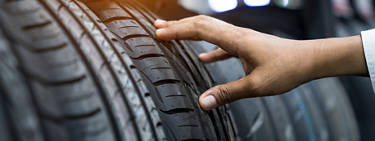
The average vehicle weighs nearly two tons and is connected to the road by just four small contact patches that are roughly the size of a piece of paper. These points of contact are what puts your steering, braking, and accelerating into motion.
This is why tires are one of the most important safety components on your vehicle. Different tire types are engineered for specific conditions, driving styles, and vehicle types. For example, all-season tires prioritize versatility while winter tires maximize traction on snow and ice. Performance tires focus on handling and speed.
Choosing the right tire isn’t just about comfort or performance – it directly affects stopping distance, traction, fuel efficiency, and tire lifespan. Below, we’ll explain the most common types of vehicle tires, what they’re designed for, and how to choose the best option for you.
| Tire Type | Best For | Typical Vehicles |
|---|---|---|
| All-Season Tires | Balanced year-round driving | Sedans, crossovers |
| Touring Tires | Comfort and highway driving | Sedans, family SUVs |
| Summer Tires | Warm-weather performance | Sports cars |
| Performance Tires | Precise handling and speed | Performance vehicles |
| Winter / Snow Tires | Snow and icy conditions | Any vehicle in cold climates |
| All-Terrain Tires | Mixed pavement and off-road | SUVs and trucks |
| Mud-Terrain Tires | Extreme off-road driving | Off-road trucks |
| Run-Flat Tires | Driving after a puncture | Luxury vehicles |
| Spare Tires | Temporary emergency use | All vehicles |
The Most Common Types of Vehicle Tires
Below are some of the most common tire types that you’ll see on the roadway for passenger vehicles.
All-Season Tires
All-season tires are designed to deliver balanced traction in the mildest conditions of every season, including dry, wet, and mild winter conditions. They are the most commonly installed tire type for passenger vehicles because they offer a versatile mix of comfort, performance, and durability.
Key characteristics include:
- Moderate tread patterns for year-round handling
- Comfortable ride quality
- Longer tread life compared to performance tire types
- Balanced traction between dry, wet, and light snow conditions
All-season tires work best in moderate climates where temperatures typically stay above 45F. Drivers in colder regions may need dedicated winter tires for improved traction and performance in freezing weather.
SHOP ALL-SEASON TIRESAll-Weather Tires
All-weather tires are a hybrid tire that offers stronger performance in inclement weather and winter conditions compared to all-season tires. Think of them as souped up all-seasons. They are an emerging tire category.
Key characteristics include:
- Superior wet, ice, and snow traction to all-seasons
- Feature three-peak mountain snowflake severe weather rating
- More aggressive tread pattern
- May wear faster in extreme heat conditions
- Balanced dry, wet, and winter handling
Although all-weather tires offer better winter condition performance, they are not a replacement for dedicated winter tires. If your region experiences temperatures consistently below 45F (regardless of the presence of snow or ice), then you should use winter tires.
Since they are not an official tire category, shopping for all-weather tires can be challenging. Check out our picks for the best all-weather tires for 2026!
Touring Tires
Touring tires are designed for comfort, a quiet ride, and long tread life on highways. This is why they are commonly found on sedans and family vehicles. They are sometimes called “grand touring tires” and utilize all-season tread components for reliable traction.
Benefits of touring tires include:
- Reduced road noise
- Enhanced ride comfort
- All-season traction
- Long treadwear and warranties
Touring tires are an ideal choice for drivers who prioritize comfort and fuel efficiency over sporty handling.
SHOP TOURING TIRESSummer Tires
Summer tires are engineered to maximize traction and handling in warm weather conditions.
These tires use specialized rubber compounds that remain flexible in heat, allowing them to deliver:
- Excellent dry-road grip
- Hydroplane resistance
- Improved cornering stability
- Short braking distances
However, summer tires lose traction when temperatures drop and should not be used in snow, winter, or freezing conditions.
If you’re considering summer tires, check out our summer vs all-season tire comparison to find what option suits your climate best.
SHOP SUMMER TIRESPerformance Tires
Performance tires are designed for vehicles that prioritize speed, responsive steering, and aggressive cornering. You typically see them on high-powered sporty vehicles.
Compared with standard tires, they often feature:
- Stiffer sidewalls
- Wider tread contact patch
- High-grip rubber compounds
Performance tires emphasize grip over longevity so they typically wear faster than touring or all-season tires.
SHOP PERFORMANCE TIRESCompetition Tires
Competition tires are often called track tires as they are designed specifically for racing environments where maximum traction is required. You will usually only see them on high-powered racing vehicles at the track as they are not typically DOT approved for street-use.
They typically feature:
- Extremely soft rubber compounds
- Minimal tread patterns
- High dry (but sometimes also wet) traction
- Reinforced body and sidewalls (Kevlar or Aramid)
- Maximum contact with the road surface
Although these tires deliver exceptional performance and grip, they are not intended for everyday street driving.
SHOP COMPETITION TIRESTires Designed for Winter
If you live in a region that experiences true winter conditions of temperatures consistently at or below 45F (with or without snow, ice, or cold rain), you should use winter designated tires for the maximum degree of safety.
Snow/Winter Tires
Winter tires are specialized tires engineered to maintain performance in cold conditions. They offer traction in snow, ice, and cold pavement because their specialized tread compound remains flexible in freezing temperatures.
They also include advanced features such as:
- Deep tread grooves to remove snow
- Aggressive tread patterns
- Thousands of tiny slits called sipes (or kerfs)
- Three-peak mountain snowflake severe weather rating
These design elements allow winter tires to provide significantly shorter stopping distances on winter roads compared with all-season tires.
We prefer the term “winter tire” over “snow tire” because they don’t only function in snow. Check out our picks for the best winter tires for 2026!
SHOP WINTER TIRESStudded Tires
Studded tires are winter tires that use small metal studs embedded in the tread to boost traction on ice. Studs dig into hard-packed ice and snow to provide additional grip during braking and acceleration.
Because they can cause road wear or damage, studded tires are restricted or seasonal in some states. Drivers should always check local regulations before installing them.
Studded tires or snow chains may be required in some extreme areas, such as mountain passes.
Some studded tires come pre-studded but other winter tires may be labeled “studdable” so studs can be added if desired.
SHOP STUDDED TIRESOff-Road and Truck Tire Types
Drivers who need tires designed for rough terrain and unpredictable surfaces need off-road tire types.
All-Terrain Tires
All-terrain tires are designed to deliver reliable traction on both off-road and paved surfaces. They offer traction in a wide variety of conditions such as sand, rock, mud, and dirt.
These versatile tires balance durability and aggressive tread patterns with everyday drivability, making them a popular option for SUVs and trucks used for:
- Overlanding
- Camping
- Off-road trails
- Dirt or gravel trails
- Towing/hauling
If you enjoy overlanding, check out our list of the best overlanding tires.
SHOP ALL-TERRAIN TIRESMud-Terrain Tires
Mud-terrain tires are engineered for extreme off-road conditions like deep mud, loose dirt, and rocky trails. They have an even more aggressive tread than all-terrain tires.
They also feature:
- Large treadblocks
- Wide tread voids to clear mud
- Reinforced sidewalls for durability
Although they excel off-road, mud-terrain tires often produce noticeable road noise and a rougher ride on paved roads.
SHOP MUD-TERRAIN TIRESLifted Truck Tires
Lifted truck tires are oversized tires designed for SUVs and pickup trucks with suspension lift kits.
These tires provide:
- Increased ground clearance
- Aggressive tread patterns
- Reinforced construction for heavy-duty use
They are most commonly found on modified trucks for off-road capability and rugged aesthetics.
Specialty Tire Types
Some tires are designed to function in a very specific circumstance, or offer a particular benefit.
Work Tires
Work tires are designed for vehicles that carry heavy loads or operate in demanding environments such as construction, commercial fleet, or agriculture.
These tires prioritize:
- High-load capacity
- Durability
- Resistance to punctures and damage
Work tires are commonly used on commercial trucks and vehicles that regularly haul equipment, materials, or people (such as metropolitan buses).
Discount Tire carries a comprehensive selection of commercial tires and also offers fleet services, including installation.
Trailer Tires
Trailer tires are specialized tires used on trailers to tow and haul heavy loads. Trailer tires differ from regular passenger tires due to:
- Higher air pressure
- Shallower tread
- Narrower width/different size
- Boosted oxidation resistance
- Lower cost
Trailer tires are exposed to harsh elements, road hazards, and extreme weight stress. Learn all you need to know from our comprehensive blog on trailer tires.
SHOP TRAILER TIRESRun-Flat Tires
Run-flat tires allow drivers to continue driving for a limited distance after losing air pressure due to a flat or a puncture. They are able to do this due to reinforced sidewalls.
Run-flat tires can typically drive up to 50 miles at up to 50mph, allowing you to reach a safe place to change your tire or a service station.
These tires help drivers avoid dangerous roadside tire changes and provide reasonable time to reach a tire repair shop.
Some original equipment (OE) tires offer run-flat technology, often in only select sizes.
SHOP RUN-FLAT TIRESSpare Tires
Spare tires are a temporary extra tire and wheel used to replace a flat or damaged tire. They are typically used in emergency road situations and are meant to allow drivers to safely reach a service station for tire repair or replacement.
There are two types:
- Full-size spare tires match the regular tires on your vehicle (these can be a permanent solution)
- Temporary “donut” spare tires are designed for short-distance emergency use
Temporary donut spare tires should not be used for more than 50 miles at more than 50mph.
Check out our spare tire guide to learn all you need to know about spare tires, maintenance, and FAQ.
SHOP SPARE TIRESTires for Lawn and Utility Equipment
Smaller equipment often uses specialized low-speed tires.
Common examples include:
- Golf cart tires
- Lawn mower tires
- Wheelbarrow tires
These tires prioritize stability, turf protection, and durability rather than high-speed traction and performance.
How To Choose The Right Tires For Your Vehicle
With so many tire types to choose from, it can feel overwhelming to make a tire purchase. You should choose tires based on the following:
- Vehicle type
Driving style
Climate
Road conditions
Start with size and fitment because this will typically determine what tire types are available to you. All vehicles have specific size requirements to support their weight, handling characteristics, and performance needs. EVs, for example, benefit from low-rolling resistance tires for improved range.
What you need out of your tires should lead your choice. Performance-oriented drivers should look into performance or track options. Commuters should prioritize touring tires for comfort and long treadwear.
Weather provides a daily challenge to all drivers. Winter region drivers should strongly consider winter tires. Warm regions can rely on summer or all-season tires.
Frequent off-road driving may require all-terrain or mud-terrain tires.
Treadwell, our smart tire buying tool, makes it easy to find tires that fit your vehicle, your driving needs, and your zip code.
GET STARTED WITH TREADWELLHow To Read Tire Size and Sidewall Markings
All tires include size, construction, and capability information on their sidewall using a combination of letters and numbers.
Here’s a quick guide using an example size: 225/45R17 91V:
- 225 indicates the tire’s width in millimeters
- 45 indicates the aspect ratio (sidewall height relative to width)
- R indicates the construction type (radial)
- 17 indicates the wheel diameter in inches
- 91 indicates the load index
- V indicates the tire’s speed rating
You will also find a DOT code that lists when a tire was manufactured. It’s important to check this code when purchasing used tires as tires older than 6 years may begin to deteriorate and require replacement.
For a more complete look at how to read tire size, check out our how to read a tire’s sidewall page.
FAQ About Tire Types
Below are some of the most common questions we get about tire types.
The most common tires on passenger vehicles are all-season tires and touring tires. This can vary by region, however, due to climate requiring a particular tire type (winter tires in cold regions, for example).
Some all-season tires can handle light snow but they cannot provide the same level of traction and confidence as dedicated winter tires in cold, icy, or freezing temperatures.
Touring tires typically last the longest because they are engineered for durability and highway driving.
The best tire depends on how you use your truck. Highway-terrain tires are good for commuting or towing. All-terrain tires offer versatility and terrain traction. Mud-terrain tires offer extreme off-road driving capability.
Ready to roll?
If you have any questions or are unsure what tires work best for you, drop in or give us a ring. We’ll get you taken care of. Buy and book online and save time in-store!
Stay up to date with Discount Tire content: add us as a Preferred Source in Google Search.
For more information on this and other tire and wheel services, check out ourYouTube Channel or reach out to us on X, Instagram, Facebook, TikTok and LinkedIn.