
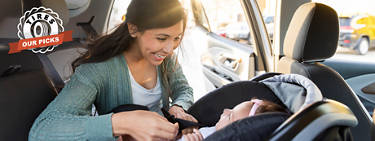
What do parents need for safe daily transportation?
Parents need three things:
- Safe, properly maintained tires
- Correct child restraints and vehicle safety practices
- A well-prepared vehicle stocked for both daily and emergency needs
WHY VEHICLE SAFETY MATTERS MORE WHEN YOU’RE TRANSPORTING KIDS
Quick Answer:
Child passengers mean vehicle safety becomes even more critical because they are more at risk for serious injury.
When it comes to the daily family schedule, things get pretty hectic with school drop offs, carpools, sports practices, summer vacations, and regular errands. With so much time on the road and the precious cargo your vehicle carries, it’s even more important than ever to uphold safe tire and travel practices.
Children are at an increased risk of injury in car-related accidents due to their smaller size, weaker bone structure, and developing brain and internal organs. Adult safety restraints and air bags are designed for adults and can seriously injure young children, which is why proper car seat and booster restraints are required.
Tires are the only part of your vehicle that touches the road, making them one of the most fundamental safety components for parents to prevent and mitigate accident risk.
THE THREE PILLARS OF SAFE KIDS TRANSPORTATION
“Safe tires are ones that will stop quickly and be predictable in all environmental situations,” says Josh Sortor, Discount Tire’s Product & Quality Manager.
Josh is also a leading expert behind Treadwell, our smart tire buying guide which uses rigorous testing data to compare and recommend the best tires for you.
There are three major categories to safely transport your family.
Safe Tires
In short, the safest tires:
- Keep you in control of your vehicle (braking)
- Are healthy and in good condition
- Are appropriate for your driving environment
Including weather, road conditions, and vehicle
All tires are designed to stop and control your vehicle, but some can stop sooner and/or better than others. Maintaining control of your vehicle at all times is what helps keep you and your family safe.
Learn about tire tread and stopping distance here.
Over time, your tread becomes less effective as the tire wears. Your tire’s tread works to affect your vehicle’s handling and stopping capabilities. Healthy tires are safe tires.
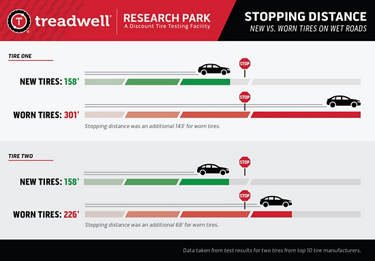
Use Treadwell, our smart tire buying tool, to compare tires for things that matter to you and your family, like braking distance and dry/wet traction. Treadwell will only show you tires that fit your vehicle and your driving area!
COMPARISON SHOP WITH TREADWELLSafe Seating
Seat belts were first federally mandated to be installed in all new vehicles starting in January 1968 but it was not mandatory to actually use them until the mid 1980s.
Safe seating and emergency technology have come a long way since then with the increase in safety regulations and required testing for children’s restraints, car seats, and boosters. Thanks to these new requirements, child injury and motor vehicle related deaths have fallen. The NHTSA estimates that car seats reduce the risk of fatal injury of infants by 71% and 54% for toddlers in passenger cars.
National safety guidelines from the National Highway Traffic Safety Administration (NHTSA) require children to ride in the back seat in a federally approved device matched to their size.
Each individual state may have different requirements, but in general:
- All passengers should wear their seatbelts/safety restraints
- You should be able to buckle your seat belt comfortably
- Children should be seated in age and size appropriate seating devices (car seats, boosters)
Read NHTSA’s overview of car seats and boosters here - Car seats and boosters should be properly installed
Many organizations, such as your local fire department, offer car seat checks and installation assistance - Children under 13 must sit in the back seat
- Secure loose cargo to prevent injury in the event of a sudden stop or accident
Safe Preparation
All trips, no matter how short, should begin with the proper prep. Safe preparation of the family vehicle includes:
- Vehicle & tire inspection
This includes an overall tire inspection for tire pressure, tread damage, and tread depth. Don’t forget your spare tire! Check your vehicle for damage, gas, battery health, A/C, wipers, and lights. - Emergency supplies
Including first aid kit, jumper cables, flashlight, portable air compressor or tire inflator, drinking water, non-perishable food, and battery pack/power bank - Family supplies
Include:- Wet wipes
- Diapers/extra underwear
- Snacks
- Water/hydration
- Power bank
- Plastic bags (for messes)
- Spare outfit for littles
Read more from our road trip checklist here.
WHAT SHOULD EVERY PARENT KEEP IN THE CAR?
Family Vehicle Essentials Checklist
- Wet wipes & all-purpose cleaning wipes
- Diapers or pull ups (if applicable)
- Water bottles
- First aid kit
- Blanket
- Wet bag for soiled clothing
- Spare outfits
- Flashlight
- Spare phone charger or power bank
- Emergency contact information
- Tire pressure gauge
- Portable inflator
- Tire tread gauge
- Road flares or reflective triangles
What carpool essentials should I keep in my car?
If you participate in a regular carpool, you may also want to keep the below stored in your vehicle:
- List of emergency contacts
- List of allergies & medications
- Trunk or backseat organizers
- Small car trash can
- Long multi-device charger cord
- Vomit bags
- Tissues
HOW DO TIRES AFFECT FAMILY SAFETY?
Tires do more than just move your vehicle forward. Tires affect:
- Braking distance
- Dry, wet, and winter traction
- Vehicle control
- Emergency maneuvering
Your tires play a huge role in maintaining control in driving situations, even seemingly ordinary ones. For families transporting children, maintaining adequate tread depth and selecting weather-appropriate tires can significantly improve safety and predictability on the road.
We recommend replacing any tire that has a tread depth of 4/32’’ or less!
Learn about tire tread depth and stopping distance here.
Keep in mind that driving conditions can vary widely across the nation. Check out our Best Tires by State section of our blog for more local recommendations!
READ OUR BLOGBEST TIRES FOR FAMILY VEHICLES
Below are our recommendations for the safest tires by vehicle type. These tires have all scored high for important performance features like braking, traction, and handling in rigorous third party testing performed for Treadwell.
Learn how Treadwell tests tires here.
I drive a sedan
- Michelin Defender 2
- Goodyear Assurance MaxLife
- Yokohama YK-GTX
- Michelin CrossClimate2 (all-weather tire)
I drive a sporty coupe or sedan
I drive a crossover or small/medium SUV
I drive a pickup truck or large SUV
The Safest Winter Tires for Families
Discount Tire recommends switching to dedicated winter tires if your region experiences winter temperatures at or consistently below 45F, regardless of the presence of rain, snow, and ice.
Winter tires are the safest option for your family in winter conditions. All-season tires do not perform as well as winter tires. All-season tires do not brake as well as winter tires do in winter conditions. For truck and SUV drivers: all-terrain and mud-terrain tires aren’t as dependable in cold weather, either.
If you live in a mild winter region, an all-weather tire might be the best option for you.
Learn about tire performance in temps below 45F.
Discount Tire tests winter tires for acceleration and stopping power as well as lateral (side to side) grip and predictability in handling situations. Here are some of our recommended winter tires:
I drive a coupe or sedan
I drive a crossover or small/medium SUV
I drive a pickup truck or large SUV
- Bridgestone Blizzak DMV2 (for SUVs)
- Cooper Discoverer Snow Claw (Josh says it’s the best!)
Josh Sortor says: “A safe tire will wear all the way out without any surprises. Everything we sell, including entry level tires, meets that criteria.”
How do I choose the safest tire for my family?
The easiest way to find the safest and best tire for your family is to use Treadwell, our smart tire buying tool. In a few easy steps, Treadwell will recommend tires that fit your vehicle, your needs, and your driving area.
It’s easy. Just tell Treadwell:
- What you drive
- How you drive (what’s important to you?)
- Where you drive
It takes just a few minutes and is the same tool we use in-store to recommend the best tires for you.
GET STARTED WITH TREADWELLFAQ
The most important safety feature for a family vehicle is stopping capability. Traction and vehicle control come in close behind.
You should check your tire’s air pressure at least once a month and before any long road trips. Your TPMS will only alert you when your recommended air pressure drops by 25% or more.
Tread depths above 4/32’’ are considered safe as there is a serious loss of stopping power and hydroplane resistance below 4/32’’. However, your tires may still need to be replaced due to excessive irregular wear. Get a FREE tire inspection at Discount Tire to check your tire’s health.
A basic emergency car kit should include a flashlight, first aid kit, water and non-perishable food/snacks, road hazard tools like road flares or reflective triangles, air compressor or tire inflator, and portable battery power or power bank.
The best tires for the family SUV depend on the size of the vehicle model and the road conditions you expect to encounter. Safe SUV tires must be load rated for your vehicle’s weight and offer appropriate traction and braking power for weather conditions. The Michelin Defender LTX M/S2, Falken Pro G5 CSV, and Yokohama YK-CTX are among our most popular SUV and crossover tires for families.
Parents should pack emergency supplies, wet and diaper (if applicable) wipes, first aid kit, snacks, water/hydration, entertainment, blankets, wet bags, spare outfits, and emergency roadside tools.
You can perform a tire inspection yourself, focusing on tire tread depth, air pressure, and overall tread health. Or, you can have one of our tire experts at Discount Tire perform a FREE tire safety inspection!
A carpool emergency kit should largely contain items from your regular emergency kit, such as first aid kit, flashlights, water, non-perishable snacks, and roadside tools. However, you may also want to add more specific items such as a list of emergency contacts, list of medical conditions and medications, power cords and/or power banks, and cleaning supplies.
Ready to roll?
If you have any questions or are unsure what tires work best for you, drop in or give us a ring. We’ll get you taken care of. Buy and book online and save time in-store!
Stay up to date with Discount Tire content: add us as a Preferred Source in Google Search.
For more information on this and other tire and wheel services, check out ourYouTube Channel or reach out to us on X, Instagram, Facebook, TikTok and LinkedIn.